Detect Essential Tree Fall Risk Signs Every Homeowner Should Know
Keeping your home safe means looking beyond doors, windows, and locks. The trees around your property also need attention because damaged or weak trees can fall during storms, heavy rain, or strong winds.
Learning common tree fall risk signs helps you notice problems early. At Vasquez Tree Services, we want homeowners to feel more confident when checking for leaning trunks, dead branches, cracked bark, and other signs that may point to danger.
Recognizing the Importance of Tree Safety
Trees bring shade, beauty, and value to your home. However, they can become unsafe when decay, root damage, or storm stress weakens them. Knowing basic tree fall risk signs helps you act before a tree causes damage.
Regular checks also make your yard safer for family, guests, and neighbors. For more help with warning signs, you can read our guide on how to identify hazardous trees in Little Rock.
Common Reasons Trees Become Unstable
Many tree problems start small and grow over time. Weather, soil changes, pests, and poor cuts can all weaken a tree from the inside or below the ground.
- Soil erosion that exposes roots and reduces support.
- Heavy rain that leaves roots sitting in wet ground.
- Storm damage that splits trunks or breaks large limbs.
- Pests or disease that weaken wood and branches.
- Construction work that harms roots near driveways or homes.
These issues can create unstable tree indicators that are easy to miss at first. Because of that, slow changes around the trunk, roots, and crown should never be ignored.
Warning Signs Around Your Tree
Some signs a tree may fall are visible from the ground. You do not need special tools to notice many of them, but you do need to look carefully and often.
- A trunk that leans more than it did before.
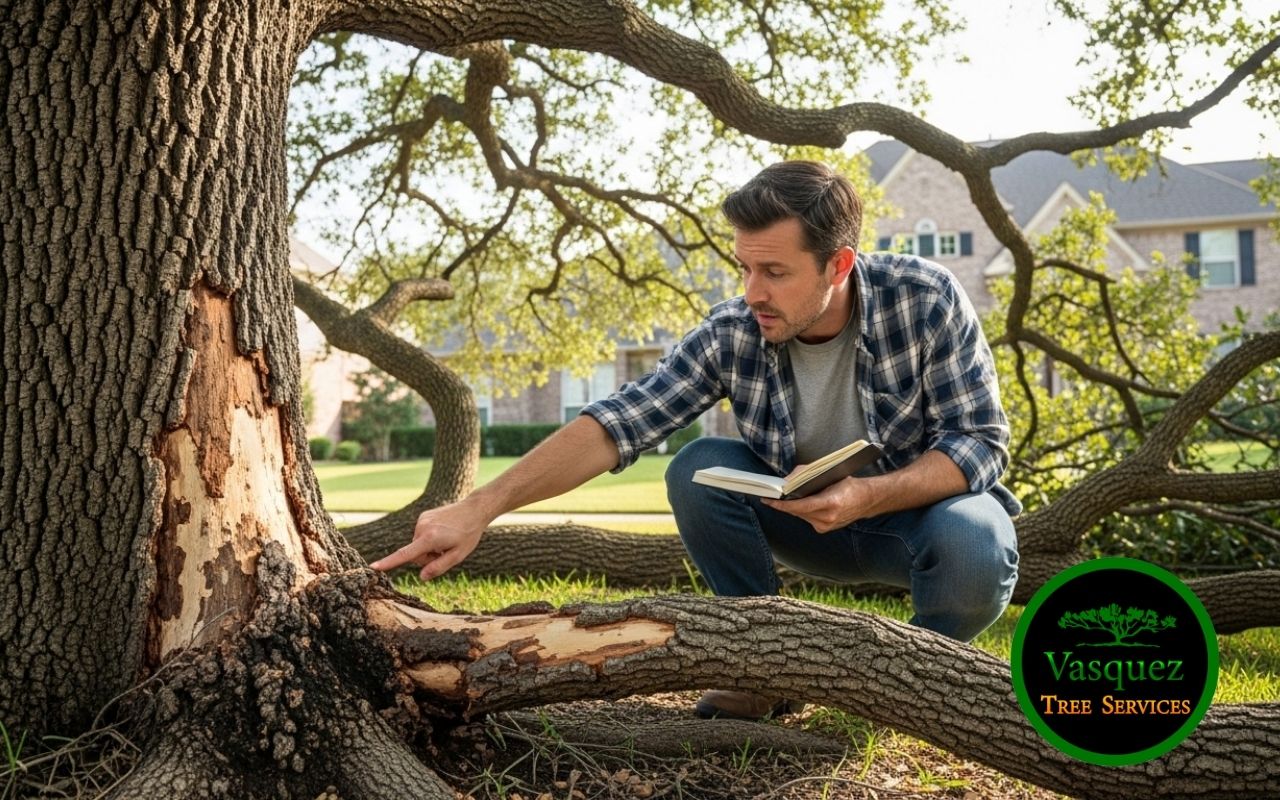
- Deep cracks, splits, or peeling bark.
- Dead branches hanging in the crown.
- Fungus growing near the base of the tree.
- Raised soil or broken roots around the trunk.
- Large hollow areas or soft spots in the wood.
Vasquez Tree Services recommends keeping a safe distance from any tree that shows several tree fall risk signs at once, especially after storms or strong winds.
How Can You Check A Leaning Tree?
A leaning tree is not always dangerous. Some trees grow toward sunlight and stay stable for many years. However, a sudden lean or a lean that gets worse can point to root failure or weak soil.
Look at the ground near the base. Cracked soil, lifted roots, or a fresh gap around the trunk may show that the tree is shifting. These are serious unstable tree indicators and should be checked by a professional.
A careful review of urgent tree care signs can help you decide when a problem needs fast attention.
Root and Soil Issues That Matter
Roots hold a tree in place, but they are often hidden. This makes root problems harder to notice until the tree begins to lean, lose branches, or show stress in the leaves.
Compacted soil can block air and water from reaching roots. Poor drainage can cause root rot. Erosion can remove the soil that supports the tree. Over time, these problems can increase the chance of failure.
When roots look exposed, broken, soft, or lifted, it is time to be careful. A tree inspection in Little Rock can help confirm whether the tree is still stable or needs care.
Preventive Steps For Safer Trees
Good tree care lowers risk and helps trees stay strong through seasonal weather. Simple habits can also help you find small problems before they become costly or unsafe.
- Check trees after storms, heavy rain, and strong wind.
- Remove dead or broken branches before they fall.
- Keep mulch away from direct trunk contact.
- Water trees during long dry periods.
- Avoid cutting large roots near sidewalks or driveways.
- Schedule routine care before damage spreads.
For nearby service areas, you can also learn more about our tree services in North Little Rock AR.
Frequently Asked Questions
What are the most common signs a tree may fall?
The most common signs include a sudden lean, cracked trunk, dead branches, exposed roots, fungus near the base, and soil lifting around the tree. Several warning signs together can mean the risk is higher.
When should I schedule a tree inspection?
You should schedule a tree inspection in Little Rock after major storms, when a tree begins leaning, or when you notice cracks, decay, or dead limbs. Vasquez Tree Services can check the tree and explain the safest next step.
Can a tree with dead branches still be saved?
Sometimes it can. If the trunk and roots are healthy, careful pruning may help. However, dead branches can fall without warning, so they should be handled before they put people or property at risk.
Are leaning trees always dangerous?
No, some trees naturally grow with a lean. A tree becomes more concerning when the lean is new, getting worse, or paired with root movement, cracked soil, or trunk damage.
How often should homeowners check for tree fall risk signs?
Homeowners should check trees at least once each season and after harsh weather. Regular checks make it easier to spot changes early and prevent larger safety problems.
Schedule Help Before Tree Problems Grow
Tree problems can become serious quickly, especially when storms move through the area. If you see tree fall risk signs, do not wait until a branch breaks or a trunk shifts closer to your home.
When you contact Vasquez Tree Services, we listen to your concerns, inspect the visible risks, and guide you toward a safe solution. Our goal is to help you protect your home, your family, and your yard.
Talk with Vasquez Tree Services through our contact page for tree inspection and care before a small warning sign turns into a larger hazard.



Trim Your Trees for Optimal Growth and Health