
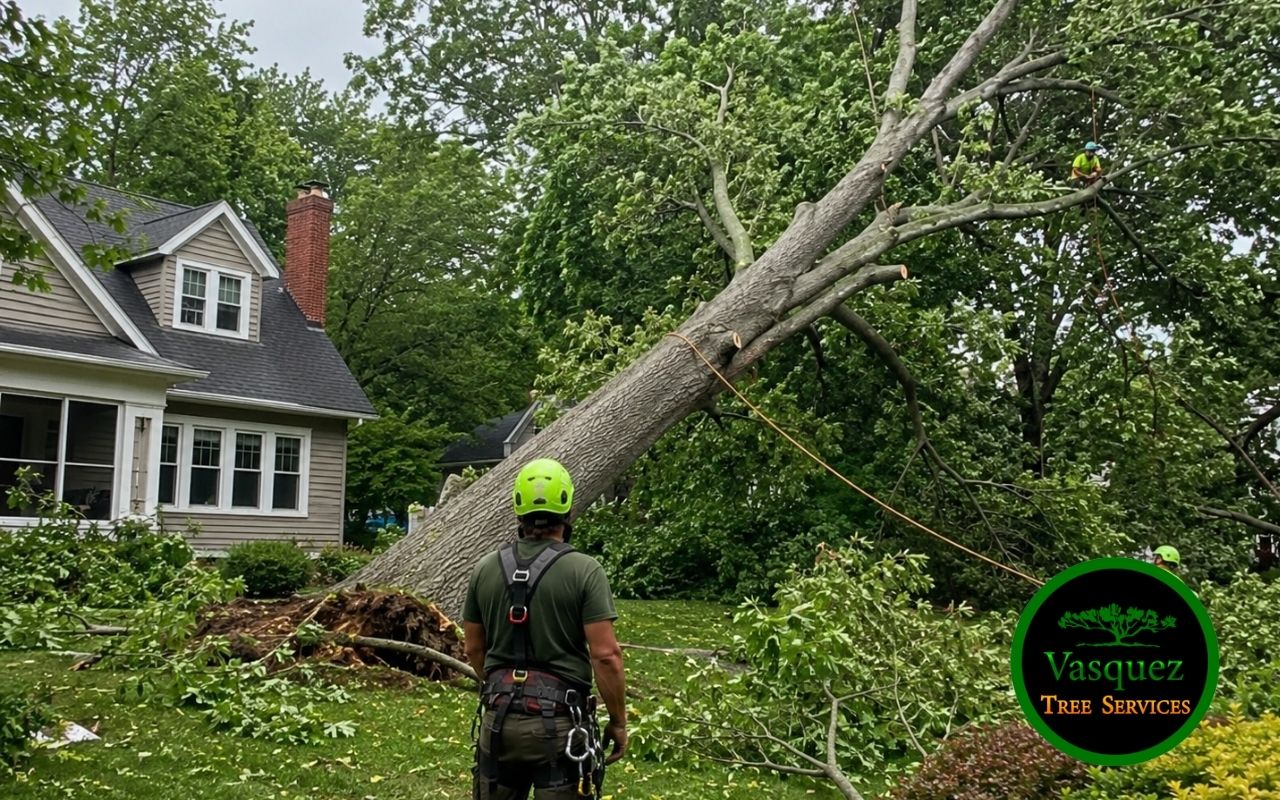
Safe Leaning Tree Removal Tips For Storm Damaged Yards
Leaning tree removal can feel stressful after strong wind, rain, or soil movement. At Vasquez Tree Services, we help homeowners spot danger early, protect nearby spaces, and make safer choices before a weak tree causes damage.
Because many trees change slowly, small signs matter. This guide explains why trees lean after storms, how to read warning signs, and when professional tree removal in Little Rock is the safer next step.
Storm Clues That Show Your Tree Needs Attention
After a storm, a tree may lean because roots have shifted, soil has washed away, or heavy branches pulled the trunk off balance. Sometimes the change looks small at first, but it can grow worse after more rain.
Watch the ground near the base. Raised soil, fresh cracks, or exposed roots may show that the tree is losing support. For more guidance, read our helpful resource about when a tree may need removal.
Clear Warning Signs A Leaning Tree Is Unsafe
Learning the signs a leaning tree is unsafe can help you act before the damage spreads. Some signs are easy to see, while others appear near the trunk, roots, or lower branches.
- Soil lifting or cracking around the base
- Deep trunk splits or peeling bark
- Roots showing after heavy rain or wind
- Dead, hanging, or broken branches overhead
- Mushrooms or soft spots near the trunk
If the tree moves when pushed lightly, the roots may already be weak. In that case, keep people away from the area and ask for professional help before touching the tree.
Careful Tree Checks Help Prevent Costly Yard Damage
A full check helps you learn whether the lean is old, natural, or dangerous. Some trees grow toward sunlight, but a new or fast-changing lean may point to root failure or soft soil.
Professional leaning tree removal may be safest when the trunk keeps shifting, branches hang over your roof, or cracks appear near the base. In Little Rock, clay soil and heavy rain can make weak roots even less stable.
Professional Guidance Makes Difficult Tree Decisions Safer
With Vasquez Tree Services, you get clear advice before leaning tree removal begins. Our team looks at the trunk, crown, roots, and nearby structures so you can understand the safest option.
Some trees may need trimming, bracing, or close monitoring. Others need removal to protect homes, driveways, fences, and people. You can also review our page about safe removal methods for helpful details.
Permits And Local Rules Keep Removal Work Responsible
Before starting tree removal in Little Rock, it is smart to check local rules. Some trees may need approval before removal, especially when they are large or located near shared spaces.
- Confirm whether the tree needs a local permit
- Take photos of the lean and visible damage
- Keep approval documents available during the work
- Ask whether replanting is required afterward
When you contact Vasquez Tree Services, we explain what information may help with your project. For direct support, use our contact page and share what you are seeing.
Safe Planning Steps Before Cutting A Leaning Tree
For leaning tree removal, planning should come before cutting. Clear the area, move cars and outdoor items, and keep pets and people far from the drop zone.
- Mark the direction the tree is leaning
- Choose safe exit paths before work begins
- Avoid cutting during wind or heavy rain
- Use proper gear for eye, hand, and head safety
- Call trained crews when structures are nearby
Large or unstable trees can shift without warning. For this reason, many homeowners choose expert help instead of taking risks with ropes, ladders, or chainsaws.
Frequently Asked Questions
Why Do Trees Lean After Storms?
Trees may lean after storms because wind loosens roots, rain softens soil, or erosion removes support. A sudden lean should be checked quickly, especially near a home.
Can A Leaning Tree Become Safe Again?
Some trees can stay safe if the lean is old and the roots are strong. However, a new lean, cracked soil, or exposed roots may mean the tree needs removal.
How Fast Should I Act After Noticing Leaning?
You should act soon if the lean appears after a storm or keeps changing. Keep people away from the area until the tree is checked.
Is Tree Removal In Little Rock Always Needed?
No, tree removal in Little Rock is not always needed. A trained team can check the tree and explain whether trimming, bracing, monitoring, or removal is best.
Who Should I Call About A Dangerous Leaning Tree?
Call a trained tree service team when the tree is near your home, power lines, fence, driveway, or walkway. Safety should come first.
Healthy Follow Up Care Protects Your Whole Landscape
After leaning tree removal, nearby trees still need attention. Root changes, soil movement, and storm damage can affect more than one tree in the same yard.
Our team at Vasquez Tree Services keeps safety and curb appeal in mind during every visit. For help with larger projects, see our page about local tree removal services.



Trim Your Trees for Optimal Growth and Health