
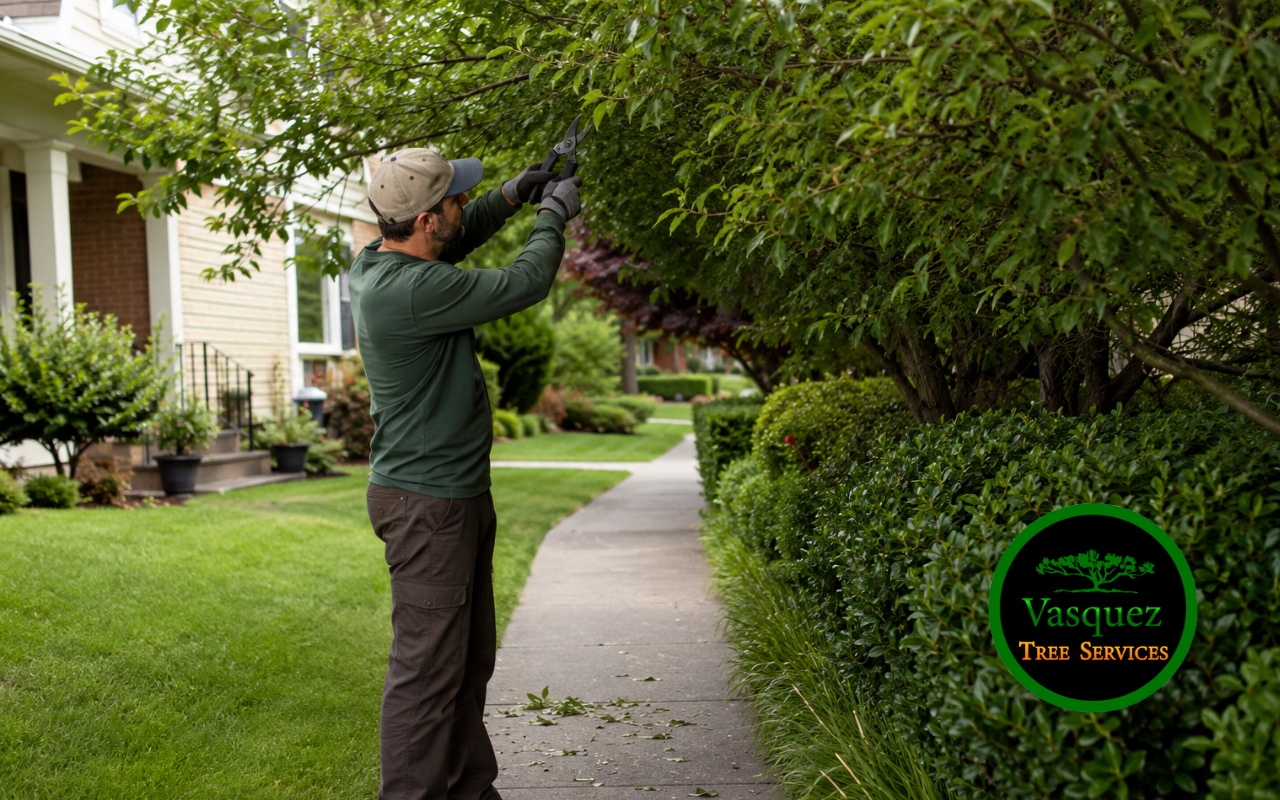
Low Branch Trimming Tips for Safer, Healthier Trees
Low branch trimming keeps your yard safer while supporting strong tree growth. At Vasquez Tree Service, we help homeowners handle low-hanging branches with care, clear steps, and the right tools for each tree.
Branches near paths, roofs, and fences can cause damage or block access. However, careful cuts protect the tree’s shape and health while keeping outdoor spaces open, clean, and easier to use.
Why Lower Branch Care Supports Stronger Tree Growth
Lower limbs often compete with the upper canopy for light, water, and nutrients. As a result, removing weak or crowded growth helps the tree send energy toward stronger branches and a more balanced structure.
Better space between limbs also improves airflow. This can lower moisture around leaves and bark, which may reduce common problems linked to fungi, pests, and slow drying after rain.
Best Seasons for Trimming Without Causing Tree Stress
Late winter or early spring is often a good time for low branch trimming. During dormancy, the branch structure is easier to see before fresh leaves appear.
Still, damaged branches should not always wait. When trimming branches over walkways, act soon if they block safe movement, scrape a roof, or create a risk during wind and storms.
Simple Pruning Methods That Protect Healthy Tree Tissue
Clean cuts help a tree close wounds in a natural way. Cut just outside the branch collar, which is the raised area where the branch joins the trunk or a larger limb.
- Use sharp tools for smooth, controlled cuts.
- Remove small branches before they grow too heavy.
- Avoid leaving long stubs near the trunk.
- Never tear bark while pulling down a limb.
Our team at Vasquez Tree Service follows careful steps that protect bark and reduce stress. For more guidance, review the signs that a tree may need trimming.
Essential Tools for Safe and Clean Branch Removal
The right tool depends on branch size and height. Bypass pruners work well for small growth, while loppers give more reach and strength for medium branches near eye level.
- Select a pruning saw for thicker limbs.
- Use a pole pruner from stable ground.
- Wear gloves and eye protection.
- Clean blades before moving between trees.
A ladder adds risk on soft or uneven soil. Keep your footing secure, avoid overreaching, and stop when the area feels unsafe.
Safety Checks Before Cutting
Before low branch trimming, look for power lines, loose limbs, nearby cars, pets, and people. Clear the area, plan where each branch may fall, and never work directly under a heavy cut.
Also, check the weather before starting. Wet bark, strong wind, and poor light can make the work dangerous. When the job needs climbing or large cuts, professional support is the safer choice.
Managing Branches Near Walkways, Roofs, and Fences Safely
Low-hanging branches can scratch roofs, block doors, and reduce clear space along paths. Small, planned cuts usually work better than removing a large part of the tree at one time.
Leave enough room for growth and movement. With Vasquez Tree Service, you can request a careful tree trimming service in Little Rock for branches near homes, fences, or busy walkways.
Warning Signs That Call for Professional Tree Care
Some problems are too risky for basic yard tools. Cracks, hollow areas, hanging limbs, and branches near utility lines can lead to injury or serious property damage.
- Large limbs lean over a home or street.
- Branches touch or cross power lines.
- The trunk shows deep cracks or decay.
- Several limbs die within one season.
When these signs appear, contact trained help instead of making a risky cut. Our professionals can review the tree and explain the safest next step through our tree care contact page.
Frequently Asked Questions
How often should lower tree branches be trimmed?
Most trees need light checks each year. The schedule depends on tree type, age, growth speed, and nearby paths or buildings.
Can I trim branches during the summer?
Light work may be possible for damaged limbs. However, heavy pruning in hot weather can stress some trees.
What makes a pruning cut safe?
A safe cut is clean and placed just outside the branch collar. It should not leave a long stub or cut into the trunk’s healthy tissue.
Should I seal cuts after pruning?
Most healthy trees close cuts without paint or sealers. In many cases, keeping tools clean and making proper cuts is more useful than adding a coating.
When should I call a professional?
Call for help when limbs are large, damaged, or close to power lines. A trained crew can reduce risk.
Long-Term Tree Care After Successful Lower Branch Removal
After low branch trimming, water deeply when soil is dry and add mulch around the root area. Keep mulch away from the trunk to lower the chance of rot and trapped moisture.
Check for cracks, pests, or new growth. Regular low branch trimming keeps future problems smaller. At Vasquez Tree Service, we also support nearby property owners through our North Little Rock tree care services. For direct help, stop by our contact page.



Trim Your Trees for Optimal Growth and Health