
Essential Guide to Residential Tree Removal for Homeowners
Residential tree removal can feel difficult when a mature tree adds shade, beauty, and character to your yard. However, a damaged or poorly placed tree may threaten your roof, driveway, foundation, or family safety.
At Vasquez Tree Service, we help homeowners balance safety with the look of their outdoor space. This guide explains warning signs, local planning, safe work methods, cleanup, and future care in clear, practical steps.
Signs That a Tree May Need Removal Soon
Start by checking the trunk, branches, leaves, and roots. Large cracks, peeling bark, hollow areas, dead limbs, or mushrooms near the base can point to decay. A strong lean toward your home may also show that the tree is unstable.
- Branches hang over the roof or power lines.
- Roots lift sidewalks, driveways, or nearby soil.
- Leaves turn yellow or fall too early.
- Beetle holes, sawdust, or sticky sap appear.
When these signs appear, removing trees near homes may prevent sudden damage. A professional inspection can show whether pruning, treatment, or full residential tree removal is the safest choice.
Balancing Property Safety With Landscape Beauty More Carefully
A healthy tree can add privacy, shade, and curb appeal. Still, beauty should not hide real risks. Consider the tree’s age, health, distance from structures, and direction of growth before making a final decision.
Our team at Vasquez Tree Service looks at both safety and appearance. In some cases, careful pruning may solve the problem. In others, safe residential removal creates room for a better tree, more sunlight, or a cleaner yard design.
Local Rules and Planning Before Any Tree Work
Before starting tree removal in Little Rock, check city rules, neighborhood limits, and any permit needs. Some areas protect certain trees or require approval based on size, location, or species. Following these steps can help you avoid delays or penalties.
- Ask the local planning office about permits.
- Check property lines and utility locations.
- Review access for trucks and equipment.
- Plan where branches and logs will go.
For more local service details, visit our Little Rock tree removal service page. Clear planning supports a safer and smoother project from start to finish.
Professional Service Compared With Do-It-Yourself Tree Removal Projects
Small saplings may seem easy to cut, but large trees are much more dangerous. Heavy limbs can swing, trunks can split, and a falling section can damage a roof, fence, vehicle, or utility line within seconds.
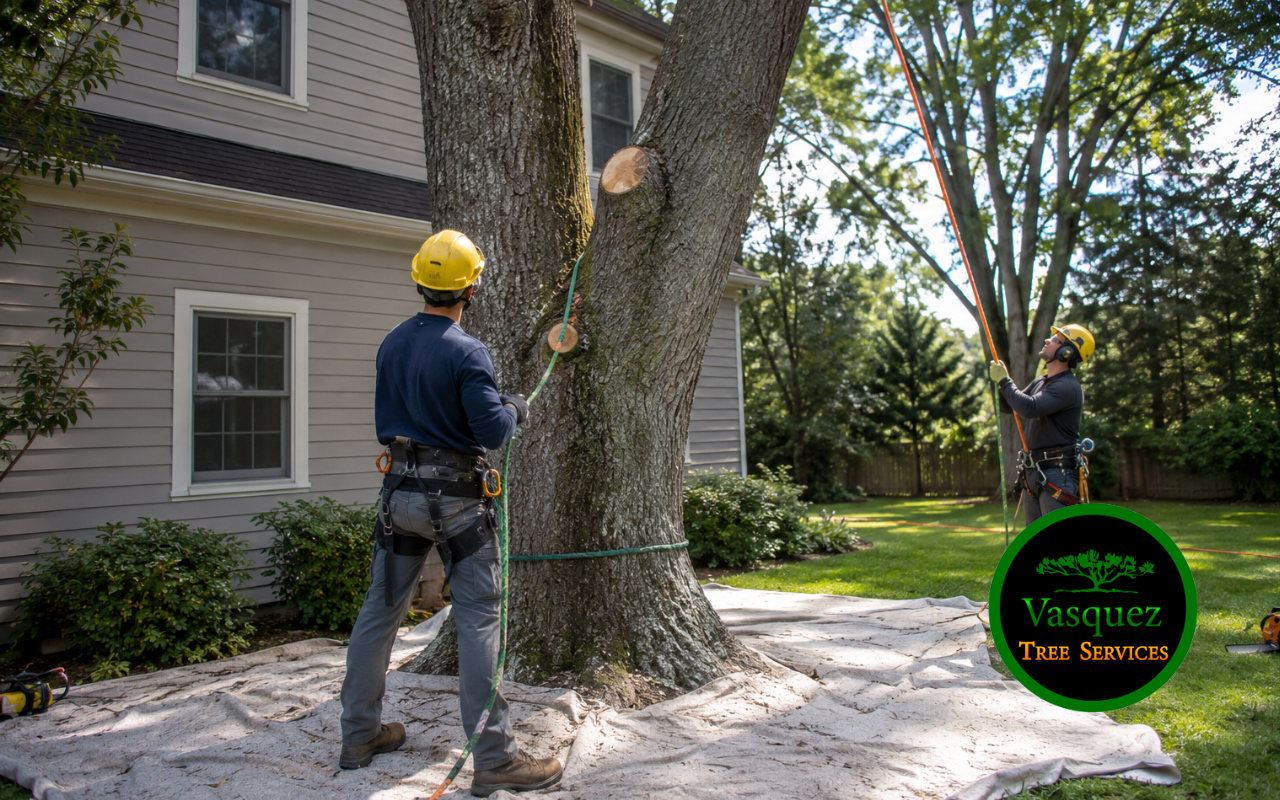
Professional residential tree removal uses trained workers, proper ropes, cutting tools, and clear drop zones. Our professionals also carry the right coverage and follow a planned process. Review our safe removal methods to understand how controlled work protects your property.
Safety Steps Used During Residential Tree Removal Projects
Safe residential removal begins with a full site check. The crew studies nearby buildings, wires, slopes, weak branches, and escape paths. Workers then choose the best way to lower each section without sudden movement.
- Helmets, eye protection, gloves, and sturdy boots
- Marked work zones that keep people away
- Ropes and rigging for controlled lowering
- Spotters who watch movement from the ground
For tall or tight spaces, bucket trucks or cranes may be needed. With Vasquez Tree Service, we explain the plan before work begins and keep the area organized throughout the job.
Cleanup Recycling and Yard Recovery After Tree Removal
After residential tree removal, proper cleanup keeps the yard safe and attractive. Branches can be chipped into mulch, while larger logs may become firewood or go to a green waste center. Removing debris also reduces hiding places for pests.
The stump area may need grinding, fresh soil, and compost before new planting. Homeowners planning work nearby can also review our North Little Rock tree care options for added support across the area.
Frequently Asked Questions
When should a tree near my house be removed?
Removal may be needed when the tree is dead, badly damaged, leaning toward the home, or causing root problems. An inspection gives you a clearer answer.
Can pruning replace full tree removal?
Yes, sometimes pruning removes dangerous limbs and keeps the tree healthy. However, severe decay or weak roots may still require residential tree removal.
Do I need a permit in Little Rock?
Permit rules can vary by location, tree size, and property type. Check with the city before scheduling work.
What happens to branches and logs afterward?
They may be chipped, hauled away, recycled, or cut into firewood, depending on their condition and your preference.
How can I request an inspection?
You can use our tree inspection contact page to share your concerns and property details.
Protecting Your Yard Through Ongoing Professional Tree Care
Regular care can reduce the chance of emergency tree removal in Little Rock. Inspect trees after strong winds, remove dead branches early, water young trees during dry periods, and keep mulch away from direct trunk contact.
Choose new trees that fit the available space and local conditions. With yearly checks and timely care, your yard can remain safe, healthy, and attractive while lowering the risk of future damage near your home.



Trim Your Trees for Optimal Growth and Health