
The Art and Safety of Tree Trimming Near Power Lines Explained
Tree trimming near power lines requires precision, expertise, and strict safety focus. Behind pruning branches lies complex planning, skilled arborists, and protective protocols. The stakes are high for workers, communities, and the environment. Moreover, urban growth makes this balance more important each day.
According to OSHA, electrical energy remains one of the main hazards during trimming. This fact highlights the need for strong training and careful procedures. In this blog, we explore why tree trimming near power lines is a specialized field. We’ll cover hazard signs, risk assessments, and permits required. Whether you are a homeowner or a curious reader, this insight brings new appreciation for the art and safety of tree care.
The Risks of Tree Trimming Near Power Lines
Working near live wires carries many dangers. The greatest is electrocution. When branches touch conductors, they carry dangerous currents back to climbers. Such accidents often cause serious injuries or even death.
Another risk is falling branches. Heavy limbs can damage property, vehicles, or hurt people below. In addition, branches may cause power outages if they land on lines. These outages affect neighborhoods, disrupt security, and endanger medical devices. Therefore, understanding these risks shows why tree trimming near power lines requires expert crews and strict safety.
- Electrocution from live wires
- Falling limbs and debris
- Power outages and service disruptions
Importance of Training and Safety Protocols
Expertise is the foundation of safe operations. Certified arborists train through programs from the ISA and utility safety schools. Training covers electrical theory, rescue methods, and safe tool use. Crews practice situational awareness and hazard recognition.
Daily briefings review site challenges and weather. Lockout procedures de-energize lines when possible. Protective gear—insulated gloves, arc-rated clothing, and dielectric footwear—adds critical safety layers. By applying strict safety rules, arborists reduce risks and protect power flow. Learn more about safe tree removal.
Identifying Tree Hazard Signs
Spotting issues early reduces accidents. Arborists study trees for visual and structural warnings. Detecting problems allows targeted pruning before collapse risks rise.
- Cracks in trunks or branches
- Leaning trees near wires
- Fungal growth or root damage
Conducting Risk Assessments Before Tree Trimming
Risk assessment is the roadmap for trimming near lines. Arborists check tree health, soil stability, and utility proximity. They review weather forecasts and wildlife presence. Each factor is logged to avoid missed dangers.
Safe distances depend on voltage and regulations. Crews also plan aerial lift routes and emergency plans. Proper assessments guide decisions and support safety during tree trimming near power lines.
Overview of Permits Required for Tree Removal Near Power Lines
Permits ensure public safety and conservation. Many cities require approval before trimming near wires. Utility companies often need coordination to de-energize lines or provide crews.
For example, in Arkansas, tree removal permits may ask for tree species, size, and removal method. Municipal approval might be needed for protected species. Therefore, following permit rules avoids fines and ensures safe work. If you’re unsure, explore our guide on when to cut down your tree.
Tools and Equipment Used for Safe Tree Trimming
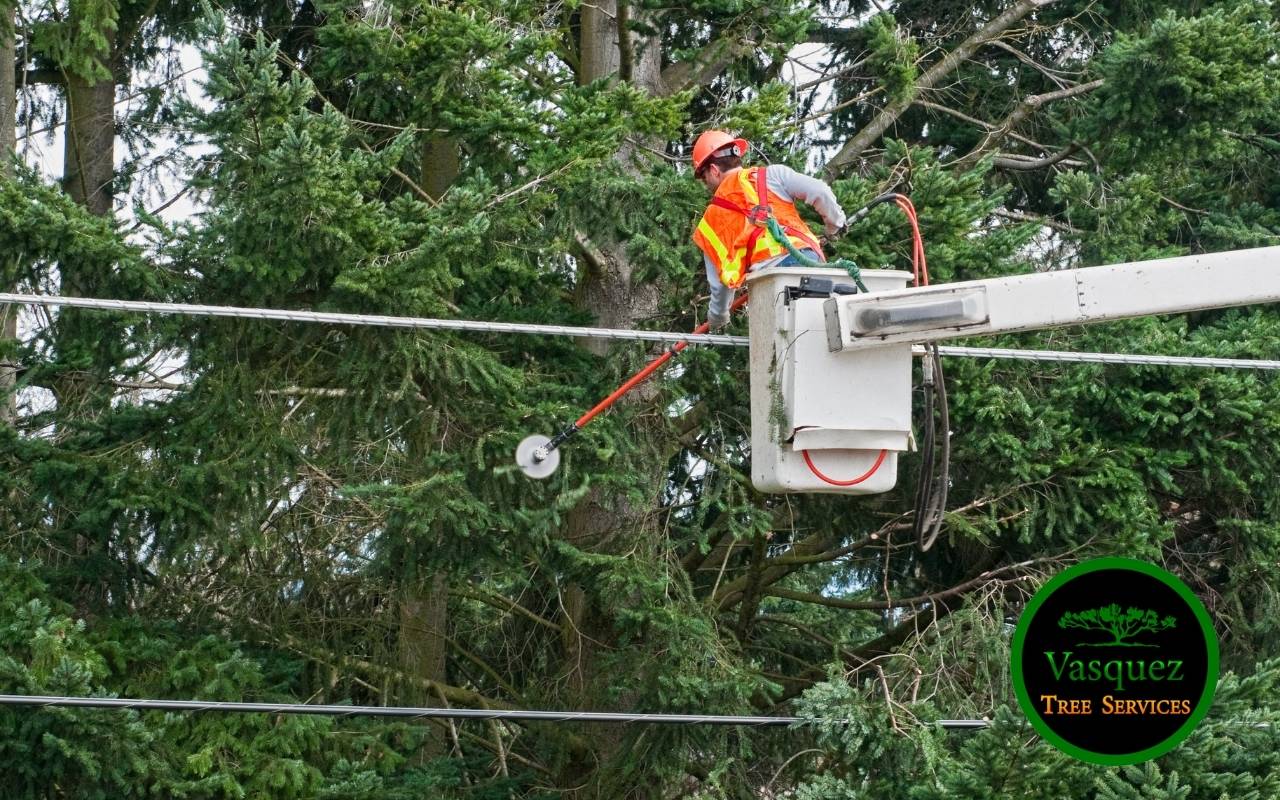
Specialized tools make work safer. Insulated poles and non-conductive saws allow trimming from a distance. Bucket trucks with insulated booms give stable work platforms. On the ground, ropes, slings, and rigging gear control falling limbs.
Chainsaws, loppers, and hand saws handle precise cuts. Safety gear, including gloves and arc-rated clothing, adds protection. Regular maintenance ensures reliable performance. Ultimately, these tools are essential for safe tree trimming near power lines.
- Insulated bucket trucks and pole saws
- Rigging ropes and hardware
- Protective gloves and clothing
Best Practices for Arborists Working Near Power Lines
Communication is key. Teams hold pre-job meetings to define roles and emergency plans. Ground spotters watch falling debris while climbers focus on safe cuts. Exclusion zones prevent unauthorized entry and reduce distractions.
Clear signs warn pedestrians, and traffic control protects drivers. Furthermore, following OSHA’s minimum approach distances keeps work safe. Discover more in our resource on choosing tree services.
FAQs About Tree Trimming Near Power Lines
Why is professional tree trimming near power lines necessary?
It prevents accidents, power outages, and ensures safety. Professionals follow strict safety standards and have the right equipment.
Can homeowners trim trees close to power lines?
No, only trained arborists should do this work. The risk of electrocution is high for untrained individuals.
What safety gear is required?
Arborists use insulated gloves, protective helmets, dielectric boots, and arc-rated clothing to minimize exposure risks.
How often should trees near power lines be trimmed?
Routine trimming depends on tree growth and utility guidelines. Many areas recommend annual or biennial inspections.
What should I do if a branch touches a power line?
Stay away and call your utility provider. Never attempt to remove the branch yourself.
Environmental Impact of Tree Trimming Near Power Lines
When done carefully, trimming improves tree health and supports ecosystems. Selective pruning increases sunlight and lowers fire risk. However, aggressive trimming may harm wildlife habitats. Arborists often time work outside nesting seasons and replant native species to balance ecology.
Community Benefits of Well-Managed Foliage and Tree Trimming
Healthy trees reduce outages during storms and keep roads safer by improving visibility. They also enhance property values and lower energy use in shaded neighborhoods. Moreover, community projects like urban forestry workshops boost pride in green spaces. Learn more about emergency tree removal to protect your community.
The Art, Safety, and Significance of Tree Trimming in Urban Landscapes
Tree trimming near power lines blends skill, safety, and environmental care. From hazard spotting to permits, each step safeguards workers and communities. Strong training, thorough assessments, and collaboration ensure safer, greener cities. If you need expert help, contact our team today for professional service.



Trim Your Trees for Optimal Growth and Health