A Homeowner’s Guide to Multi Trunk Tree Removal
Multi-trunk tree removal requires careful planning because connected trunks can shift, split, or fall without warning. In Little Rock, these trees often grow near homes, fences, and driveways. Their shared base can make removal more difficult, especially when storms or decay weaken the wood.
At Vasquez Tree Service, we understand how important it is to protect your home and yard. Therefore, our team focuses on identifying risks, choosing safe removal methods, and keeping nearby structures protected throughout the process.
Recognizing Structural Weaknesses in Trees With Multiple Trunks
Before planning removal, examine how the trunks connect near the ground. Look for deep cracks, weak joints, peeling bark, or visible decay. These signs may indicate that the tree cannot support its weight safely, especially during strong winds.
Also, inspect branches for dead wood and unusual leaning. Uneven growth can place extra pressure on connected stems. During multi-trunk tree removal, understanding these weaknesses helps our team decide which sections need special care and whether additional support is necessary.
Common Warning Signs That Make Clustered Trees Dangerous
Many multi-stem tree hazards develop slowly and become more serious during storms. Therefore, recognizing warning signs early can help homeowners avoid unexpected damage. Pay attention to changes in the tree’s appearance, movement, and surrounding ground.
- Deep cracks where two or more trunks connect.
- Mushrooms or soft wood around the shared base.
- Large branches hanging over roofs or driveways.
- Exposed roots or soil lifting around the tree.
- Trunks leaning farther after heavy rain or wind.
If you notice these conditions, avoid cutting the tree yourself. Instead, arrange a professional inspection before the structure becomes less stable.
Careful Removal Planning Protects Homes and Nearby Structures
A safe removal plan begins with checking the tree’s height, trunk direction, and available space. We also consider nearby buildings, overhead wires, and uneven ground. These details help determine whether the tree can be removed in sections.
For difficult locations, our specialized crane removal service may provide better control over heavy sections. Additionally, weather conditions and safe work areas must be reviewed before any cutting begins. Local removal requirements should also be checked when applicable.
Essential Safety Equipment for Handling Several Connected Tree Trunks
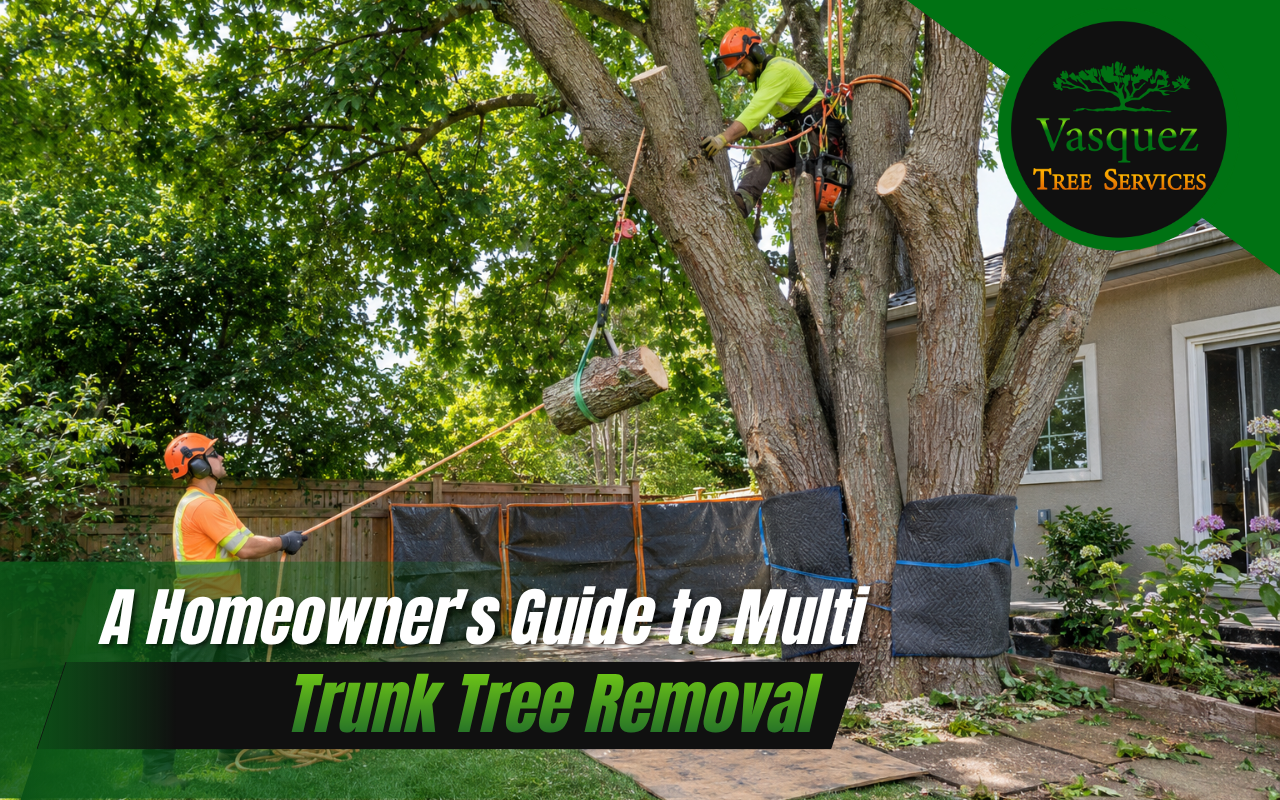
Professional multi trunk tree removal depends on suitable equipment and trained workers. Connected stems can hold uneven pressure, making unexpected movement possible. For that reason, specialized tools and protective gear are important throughout the project.
- Helmets, eye protection, gloves, and protective clothing.
- Professional chainsaws maintained for reliable cutting.
- Climbing harnesses and ropes designed for tree work.
- Controlled lifting equipment for heavy trunk sections.
- Ground protection materials for lawns and walkways.
However, equipment alone cannot prevent accidents. Our crew follows a planned approach and keeps people outside dangerous areas. Homeowners should leave elevated cutting and heavy trunk handling to trained professionals.
Practical Ways to Prevent Damage During Tree Removal
Protecting your property involves more than controlling falling branches. Gardens, patios, fences, and nearby vehicles also need attention. Before starting, we identify sensitive areas and determine how workers and equipment can move without unnecessary damage.
For homeowners considering safe tree removal around their homes, careful preparation makes a meaningful difference. During clustered trunk removal, sections may need controlled lowering instead of free-falling. Additionally, protective mats can reduce pressure on lawns, while organized work areas keep debris away from valuable landscape features.
Proper Cleanup Steps After Removing Large Connected Trees
Once the main sections are removed, cleanup becomes the next priority. Branches, logs, and scattered wood can create walking hazards. Therefore, organized debris handling helps restore safe access around your property.
- Collect small branches, leaves, and loose wood pieces.
- Cut larger logs into sections for easier handling.
- Remove debris from paths, gardens, and driveways.
- Discuss stump grinding when the remaining base causes concerns.
- Inspect the cleared area before starting new landscaping.
At Vasquez Tree Service, we believe a well-managed project includes attention to the surrounding yard. After removal, homeowners can consider soil repairs, grass restoration, or planting a more suitable tree.
Frequently Asked Questions
Are Trees With Multiple Trunks More Dangerous?
Not always. However, weak connections, decay, and uneven weight can increase the risk of splitting or falling.
Can Homeowners Remove Connected Tree Trunks Themselves?
We recommend professional help because connected trunks may shift suddenly and create serious injury risks.
When Should a Multi-Trunk Tree Be Removed?
Removal may be necessary when major cracks, decay, root damage, or dangerous leaning threaten nearby property.
Does Every Removal Require Heavy Lifting Equipment?
No. Equipment needs depend on tree size, location, access, and the condition of each trunk.
Can You Handle Trees Outside Little Rock?
For nearby properties, review our North Little Rock tree care information to learn about available service options.
Trusted Local Tree Care for Safer Outdoor Spaces
Successful multi-trunk tree removal starts with recognizing hazards and choosing professional support. At Vasquez Tree Service, we approach challenging trees with careful planning, suitable equipment, and respect for your property. Our goal is to reduce risks while keeping your outdoor space safe.
If you need tree removal in Little Rock, contact us to discuss your tree’s condition. We can review your concerns and help you determine the safest next step.



Trim Your Trees for Optimal Growth and Health